
What the rollers and tracks do
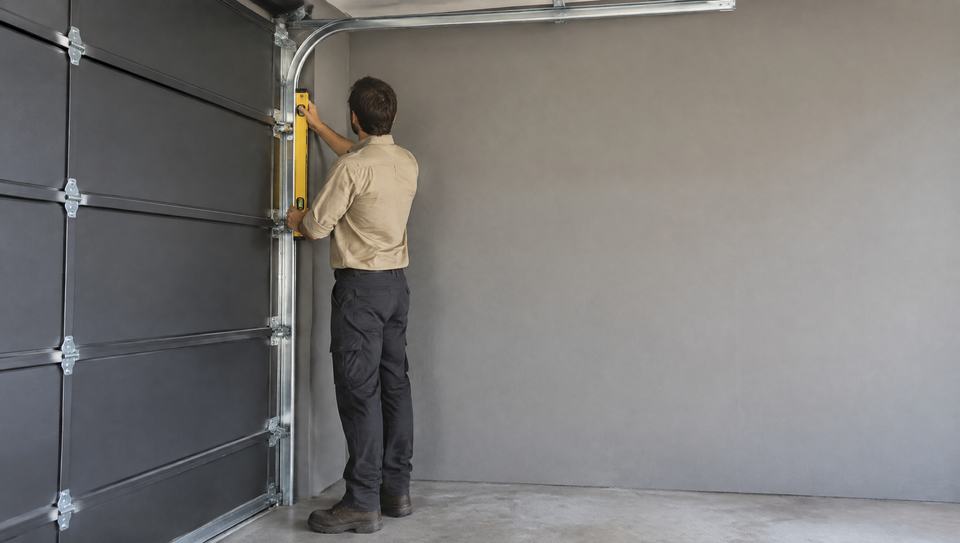
Tracks keep a garage door on its path. B&D NZ describes a sectional door as rigid hinged panels that travel up the opening and back along the ceiling, guided by tracks, and the door's rollers are what run inside them. The hinges let the panels bend around the curve at the top.
A roller door works differently. Its curtain winds onto a drum above the opening and runs in side tracks on the way, and Dominator says those tracks stop its roller doors blowing open or shut, dropping or swinging. Which parts wear depends on which door you have.
Signs the rollers or tracks need work
- The door has become hard to move by hand, which Dominator links to a warped track as well as to spring and cable faults
- A roller, pulley or hinge looks cracked, bent or worn
- A track is dented, kinked or pulling away from its fixings
- The door sits crooked, or one side runs ahead of the other
- Grinding or scraping as the door moves
- The opener stops part way or flashes a fault after the door runs
Bent or blocked tracks
A knock from a car or a gust on an open door can push a track out of line. Dominator's opener manual says very strong winds can push on the door and tracks, sometimes enough to set off the opener's obstruction sensing mid-run.
The opener often gives the first clue. On Dominator's Smart Pro, Smart and Secure, the quick operation guide says 8 flashes of the main light mean the door was obstructed, and 9 mean the motor was overloaded or stalled, in which case it says to contact the dealer to arrange a door service.
A door that has jumped its track or jammed part way should stay where it is, and the stuck or off track guide has the steps for keeping it safe until help arrives. Straightening a track means working right beside the springs, cables and brackets, which is why it belongs with a door specialist.
Rollers and hinges: care first, then parts
Rollers and hinges wear with use. Merlin's MJ3800 opener manual says to oil the door rollers, bearings and hinges once a year but not to grease the tracks, and Dominator's maintenance sheet asks for a little all-purpose machine oil on steel hinges.
The tracks get cleaning rather than grease. Dominator says to wipe inside them with a cloth dampened with mineral turps or methylated spirits, and Garador says to check them for dust and grit without putting grease or oil on them. The lubricant guide sets out what goes where.
If a roller is cracked, a hinge has split or the door still runs rough after a clean, that is the point to book it in.
What the repair involves
Expect the door specialist to look past the one worn part. The service checklist in Dominator's opener warranty covers lubrication, tightening mounting points, spring tension, the opener's travel limits and force, safety beams and door alignment. ATA's GDO-6 manual lists tracks, wheels and mounting bolts in its own technician's service.
Where there is an opener, the door's travel can change once the rollers or tracks are sorted. Dominator's manual says re-profiling is how its openers re-learn that travel after mechanical adjustments, so ask for it before the door specialist packs up.
You can feel whether the result is right. Dominator's opener warranty expects a door to move by hand with no more than 20kg of force, and B&D NZ's care guide gives 15kg for a roller door.
Springs, cables and brackets stay off limits
Tracks and rollers sit right next to the parts that carry the door's weight. Dominator says its lifting cables and springs are under extreme tension at all times and should only ever be adjusted by trained dealers, and Garador says not to touch the drums or the cables. Never loosen a track bolt or bracket to straighten it yourself.
What to tell the door specialist
- The door type: sectional, roller, tilt or Flex-A-Door
- What you have noticed: noise, dragging, a crooked door or a visible bend
- Whether anything happened first, such as a storm or a knock to the door
- What the opener's light is doing, if there is an opener
- The opener's model, from the label on its rear
- Who installed the door, from the sticker on the back of it, if there is one
Your part, and what to leave
You can
- Wiping grit out of the tracks with a cloth
- A little machine oil on steel hinges, as Dominator suggests
- Looking over the rollers, pulleys and hinges for visible damage
- Keeping the doorway clear while you wait
Leave to a door specialist
- Straightening or swapping a bent track
- Fitting new rollers or hinges
- Anything near the springs, cables or drums
- Putting a door back on its track
- Re-profiling the opener afterwards

What we would do
Have the rollers, tracks and balance looked at in the same visit. A door that drags strains every part of it, the opener included, so ask the door specialist to check the springs and the opener's settings while they are there rather than booking a second trip.