
Why the safety features matter
A garage door is heavy, and an opener moves it without anyone's hand on it. So openers have to notice when something is in the way.
The current safety standard for residential openers is AS/NZS 60335.2.95:2024, which Standards New Zealand says was published on 29 November 2024. It covers the hazards of electrically driven doors moving and the entrapment protection devices used with drives. It does not cover hazards from the mechanisms of the door itself, so a safe opener does not make a worn door safe.
Auto-reverse: what it does
Dominator says its openers detect when the door strikes an object, then stop and reverse. That is the feature you test with a block of timber. It relies on the door being in balance: Dominator warns that adding weight to a door, for example with insulation, can stop the safety reverse working as expected.
Garage door safety sensors and beams
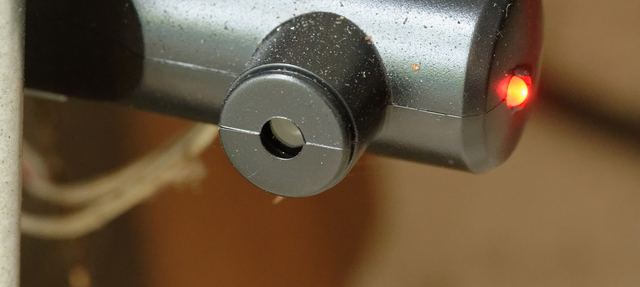
Safety beams send a line of light across the doorway, just above the floor, and tell the opener to stop if something crosses it. Dominator's manual says the beam should sit 100mm above the ground.
They are not optional on every door. B&D NZ says safety beams must be installed if the closing force at the bottom edge of the door exceeds 400N (40kg), and Dominator's manual adds any door that a smart device can run while it is out of sight. That second rule catches phone apps, so ask about beams before you add one.
The monthly safety test
Clear the doorway
Move cars, bikes and anything else out of the way. Make sure nobody is standing under the door.
Put a block on the floor
B&D NZ uses a piece of timber about 40mm high, directly under the door. For a roller door opener, it says the opener's cardboard box works too.
Close the door
Run it from the wall button. The door should strike the block and re-open.
Test the beams
With the door closing, wave something like a broom in front of the sensors, as Dominator suggests. The door should stop and reverse immediately.
If it fails, stop using it
B&D NZ says that if the door is closing and can't re-open when obstructed, discontinue use. Dominator says the sensors may be misaligned or faulty, and that a failed test is one for a technician.
Children and garage doors
Dominator says only responsible adults should operate the garage door, that remotes belong out of children's reach, and that children should be taught to keep their hands clear and never to stand or play under a moving door.
Where the controls sit helps. Its manual puts fixed wall controls at least 1.5m above the floor, within sight of the door and away from moving parts, and the manual release handle lower than 1.8m.
Test the safety system, leave the springs
The monthly test is the part you can do. Springs, cables and drums are not: Garador says not to attempt to adjust springs, and to keep your hands off the drums and cables, which are under extreme tension. Garador also says never to wash an automatic opener, because it could cause electrocution.
A door that reverses for no clear reason
A door that goes back up with nothing in the way isn't always broken. Check for anything sitting across the beams, and think about the weather: Dominator's manual says very strong winds can push on the door and tracks and sometimes set off the obstruction sensing.
If it keeps happening on a calm day, have the door checked. Opener and motor repairs covers the usual causes.
If you send us the job, mention
- Which part of the test failed: the block, the beams or both
- The door type and the opener's brand
- Whether safety beams are fitted
- Whether the door can be run from a phone
- Whether the door has been insulated or changed since it went in
What you can do, and what to leave
You can
- Run the block and beam tests every month
- Keep the beams clean and clear
- Keep remotes away from children
- Teach children to stay out from under the door
Leave to a door specialist
- Setting the opener's force and travel limits
- Repairing or lining up faulty sensors
- Fitting safety beams
- Springs, cables, drums and brackets

What we would do
Tie the test to something you already do every month, like a bill or a bin day, and do it with whoever else drives the car. Everyone in the house then knows what a healthy door does, and notices sooner when it stops doing it.