
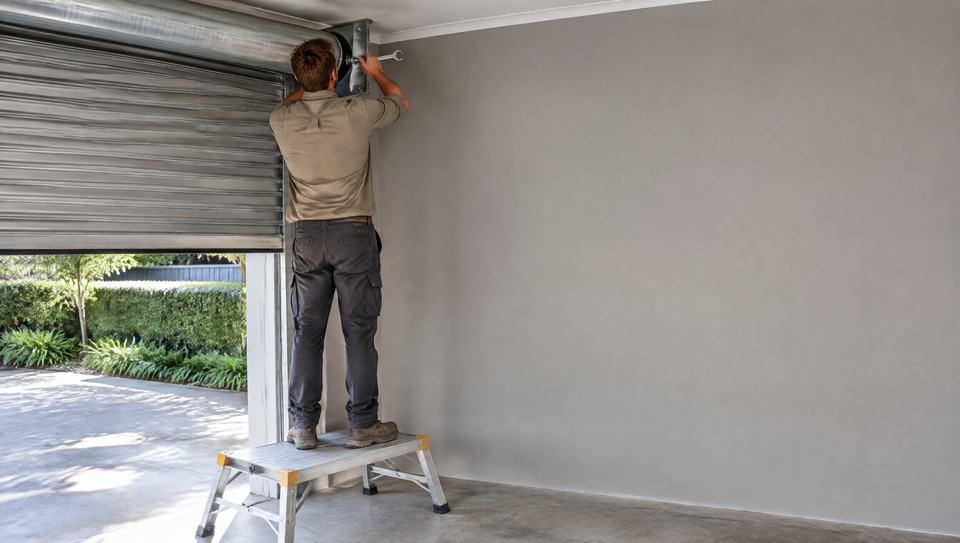

What goes wrong with a roller door
A roller door is a simple machine, and each part works hard. As B&D NZ describes it, the steel curtain rolls onto a drum above the opening, side guides keep it straight, and springs carry its weight. When something goes wrong, it is usually one of those three.
A curtain that binds in the guides, one that won't stay up, and a door that has suddenly become heavy all need a look. Dominator says its side guides stop the curtain blowing open or shut, dropping or swinging, so a curtain riding out of its guides is a fault rather than a quirk.
Never oil the guides
Reaching for a can of spray oil is the obvious move with a noisy roller door, and the wrong one. B&D NZ says never to put grease, oil or an oil-based spray such as WD-40 in roller door guides.
Clean the guides instead, and for a stiff lock use powdered graphite. If the curtain still grinds after a wash and a clean, the noise is coming from somewhere a door specialist should look at.
A roller door that has become heavy
B&D NZ gives 15kg as the most effort a roller door should take to move by hand. It also says springs lose tension naturally as the years go by, so a door that has crept past that figure is due for a spring check before anyone suggests a new motor.
An opener can hide the problem for a while by doing the lifting. If yours strains, slows or stops part way, mention it when you send the job, since a heavy curtain wears a motor out as well.
The drum and its springs are not DIY
Dominator keeps spring and cable adjustment for its trained dealers, because both stay under extreme tension whether the door is open or shut. If a cable looks frayed or corroded, or the curtain hangs lower on one side, stop using the door and leave it for a door specialist.
Salt air and roller doors
Near the coast, salt adds a repair risk that inland doors don't face. Dominator's door warranty doesn't cover coating or base metal damage from being close to the seafront, and B&D NZ asks for more frequent washing wherever salt is in the air.
If corrosion has reached the curtain's edges or the bottom rail, ask the door specialist whether a repair will last or whether a new curtain makes more sense.
Tell the door specialist
- Whether it is a standard roller door or a Flex-A-Door, which runs a roller curtain on a curved track
- Whether it has an opener, and which end of the drum the motor sits at
- What the curtain does: scrapes, sticks, won't stay up or drops
- Roughly how wide the opening is
- Whether the house is near the sea
What you can do, and what to leave
You can
- Wash the curtain with clean water and a cloth
- Clean the guides, with no oil, grease or spray
- Use powdered graphite on a stiff lock
- If it has an opener, run the reversing test: B&D NZ uses timber about 40mm high or the opener's cardboard box
Leave to a door specialist
- Spring tension and anything inside the drum
- A curtain that has left its guides or is bent
- Frayed or rusty cables and loose brackets
- Opener faults and setting the motor's limits

What we would do
Ask for the repair and a service in the same visit. B&D NZ suggests servicing a roller door every 12 months, sooner with heavy use or harsh weather, so if yours has gone longer than that, the visit that fixes the fault can check the rest of the door as well.