
Three quick checks before you book
Some opener faults are simple. Swap the remote battery, try the wall button, and check the socket the opener runs from is switched on. If the wall button works and the remote doesn't, the remote is the likely culprit.
If neither works and there is power, note what the opener does when you press the button: nothing at all, a hum, a click or a flashing light. That detail tells the door specialist a lot before they ring.
A door that reverses or stops part way
Openers are built to stop and go back up when the door meets something. Dominator says its openers do exactly that when the door strikes an object, and its manual adds that very strong wind pushing on the door and tracks can set off the same obstruction sensing mid-run.
On a door with safety beams, make sure nothing is sitting across them. Dominator's beam check is to wave something like a broom in front of the sensors while the door closes: the door should stop and reverse straight away, and if it doesn't, the sensors may be out of line or faulty.
A heavy or binding door can also make the motor give up. There is a figure for heavy: 20kg of hand effort for most doors under Dominator's opener warranty, and 15kg for a roller door in B&D NZ's care guide. Past that, the springs need attention before the motor does.
Don't open up the motor
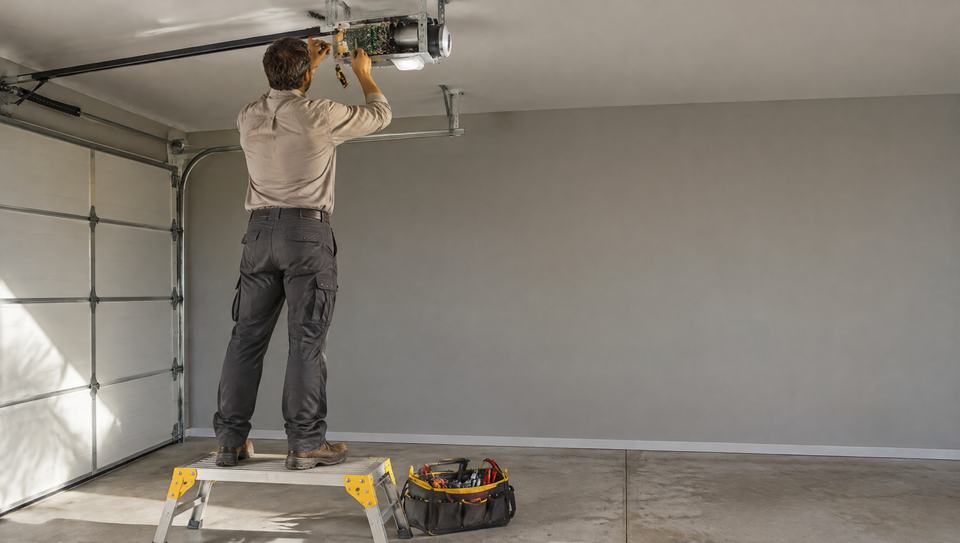
Garador says never to wash an automatic opener, because it voids the warranty and could cause electrocution. Dominator's manual says a damaged power cord must be replaced by an Automatic Technology service agent or a suitably qualified person. A new power point or hard wiring is a licensed electrician's work, with a Certificate of Compliance.
Repair the motor or replace it?
Ask the door specialist how the opener's age compares with its warranty. Dominator covers its openers by years and cycles, whichever runs out first: 7 years or 30,000 cycles for the Smart Pro, 7 years or 20,000 cycles for the Smart, Secure and Excel, and 5 years or 10,000 cycles for the Select.
Those warranties assume the opener has been serviced on Dominator's schedule. If an older motor keeps failing, replacing the motor may be the better use of the visit than another repair.
Note these for the door specialist
- The opener's brand and model, from the label on the motor
- What it does when you press the button, from the wall and from the remote
- Whether safety beams or battery backup are fitted
- Whether the fault started after a power cut, a storm or a bump to the door
- Whether the door feels heavy or stiff
What you can do, and what to leave
You can
- Change the remote battery: Dominator's remotes take a CR2032 coin cell
- Check the opener's socket is on
- Clear anything blocking the safety beams
- Keep up the monthly reversing test
Leave to a door specialist
- Anything inside the motor housing
- Setting the opener's travel limits and closing force
- A damaged power cord
- New wiring or a new power point, by a licensed electrician

What we would do
If the door reverses on windy days and behaves on calm ones, say so when you send the job. Dominator's manual notes that strong wind can trip the obstruction sensing, and its service checklist covers the opener's force setting, so that one detail points the door specialist at the setting and the door before the motor.