
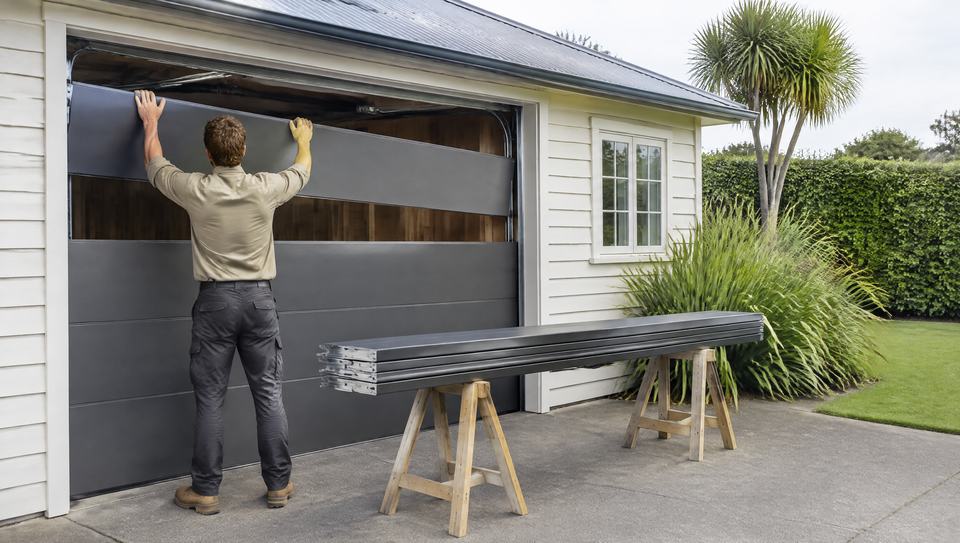
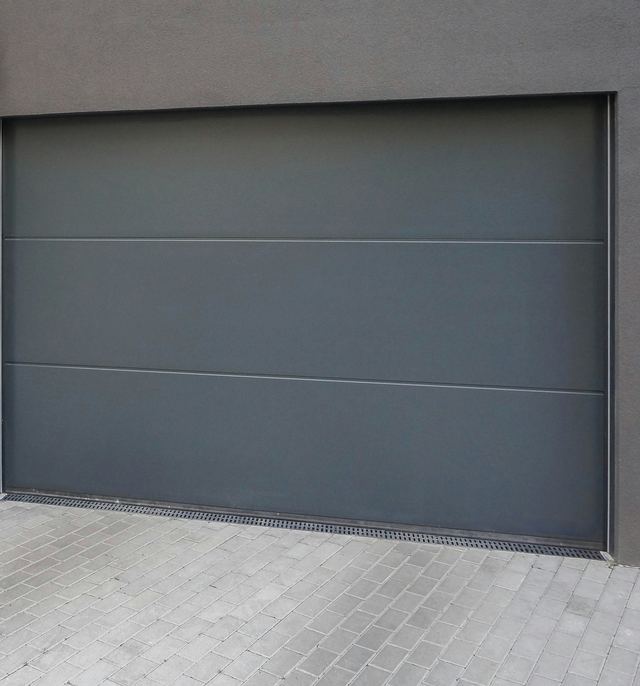
Start with the type of door
Dominator sorts home garage doors into four main kinds: steel sectional doors, roller doors, the Flex-A-Door and tilting doors. How a door opens decides the room it needs, so the space in your garage narrows the choice before looks come into it.
Then think about what the garage is for. If it doubles as a gym, an office or a sleepout, look at insulated garage doors, which B&D NZ says also dampen sound.
Made to measure in New Zealand
Dominator says all its doors are custom made to the exact size of the opening, from New Zealand steel, and made to order here. Its preferred pre-painted steel is COLORSTEEL, and it says powder coated options take the colour choice into the hundreds.
Size limits vary by door. B&D NZ says its sectional doors can be up to 6.5 metres wide, and Dominator makes its Series A roller door in widths from 1250mm to 3200mm. Single and double garage doors goes into measuring.
Before the new door goes in
Measure the opening and the space around it
Width and height of the opening, the headroom between the top of it and the ceiling, the wall on each side, and the depth back into the garage. Rough figures are fine for the first call.
Decide on the opener at the same time
Dominator rates its openers by door weight and size, so a heavy or insulated door may need a stronger model. Choosing the two together also matters for the warranty, below.
Ask the council about building consent
MBIE's exemptions guidance never names garage doors, so check with your council before work starts, especially if the opening is changing. The garage door rules page sets out what MBIE does say.
Sort the power for the opener
Dominator's manual asks for a power point on the ceiling within arm's length of the opener. A new one is fixed wiring, for a licensed electrician who issues a Certificate of Compliance.
Get the job in writing
MBIE's guide says a written contract is required for residential building work of $30,000 or more including GST, and recommends one for smaller jobs too.
Warranties when the door and opener are bought together
Dominator's 10 Year Total Confidence Warranty covers the door for 10 years and the opener for 10 years or 20,000 cycles, but only when both come from an approved dealer together, are registered online within 6 months of installation, and are serviced within 12 months and at least every 2 years after. Garador offers a 10 Year Reliability Warranty on a door and opener bought as a package and registered online.
A new door near the sea
A coastal home needs a door chosen with salt in mind. MBIE's summary of NZS 3604 places sites within 500 m of the sea or a harbour in exposure Zone D, and Dominator's warranties exclude corrosion from salty or damp conditions. Ask the door specialist which finish they would pick for your street, and how often it will need washing.
Installation is not a DIY job
A new door goes in with springs that have to be set under tension. Dominator says spring work can be extremely dangerous for anyone not trained in it, and B&D NZ says adjustments belong with an experienced door technician using the correct tools.
What you can do, and what to leave
You can
- Measure the opening, the headroom and the side walls
- Clear the garage around the opening before installation day
- Register the warranty online once the door is in
- Keep the care sheet and the warranty card together
Leave to a door specialist
- The final measure and the order
- Taking out the old door
- Installing and balancing the new door and its springs
- Any new power point, by a licensed electrician

What we would do
Ask for the door and the opener in one quote. Dominator and Garador both tie their longest warranties to a door and opener bought together and registered online, and a single quote means the opener is matched to the new door's real weight from the start.