
What springs and cables do
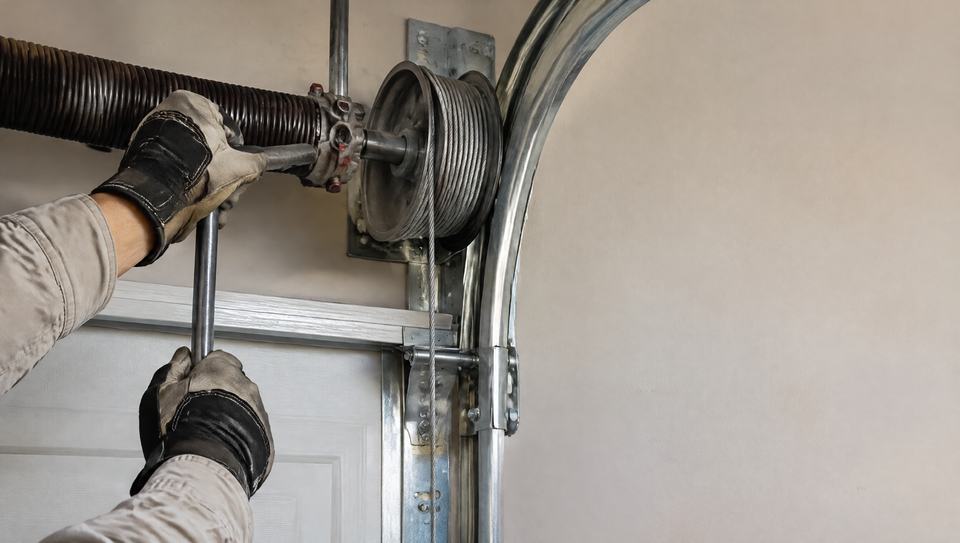
A garage door is heavy, and the springs are what make it feel light. B&D NZ says both roller and sectional doors are balanced by springs, and Garador puts the number on a typical home door at anywhere from one to four. Where a door has lifting cables, Garador says they are under extreme tension as well.
Garador also says it is natural for springs to lose tension. B&D NZ says new springs go in with a little extra tension to allow for them settling.
Signs to stop and get it looked at
- The door suddenly feels much heavier, or the opener strains to lift it
- One side sits lower than the other, or the door runs crooked
- A cable looks frayed, corroded or tangled: B&D NZ says to check them regularly
- The door has become hard to open by hand, which Dominator links to a decompressed spring, a warped track or a loose cable
- The door won't stay where it is left, or drops faster than usual
Why spring work is never DIY
Dominator says replacing or adjusting springs on any garage door can be extremely dangerous for anyone not trained in the procedure, and leaves that work to its dealers. Garador says not to touch the drums or the cables at all because of the tension in them. While a spring is broken, don't release the opener to test the door.
What the repair involves
Expect the door specialist to check the whole balancing system as well as the part that failed. Dominator's service checklist covers spring tension and door alignment, and, where there is an opener, its travel limits and force, all of which can change once a new spring is in.
Where the springs sit depends on the door. Dominator's Flex-A-Door keeps them inside its horizontal tracks. On a tilt door, B&D NZ designs the hardware to keep a broken spring's parts captive, and only its approved dealers should work on tilt door springs.
Warranties and wear
Springs wear with use, and the warranties treat them that way. Dominator's 10 Year Total Confidence Warranty doesn't pay for spring adjustment or replacement caused by normal wear and tear, and its standard warranty on metal sectional doors leaves the springs out. Garador's 10 Year Reliability Warranty covers a sectional door's parts and labour for 10 years, again without the springs.
Added weight matters too. Dominator says that if insulation goes onto an existing door, the door should be weighed and given new springs, or the opener wears out sooner.
What to tell the door specialist
- The door type and whether it is a single or double
- Whether it is stuck open, stuck shut or part way
- Whether the car is inside
- Whether the door has been insulated or had anything added since it went in
- The brand, if you can read it without standing under the door
What you can do, and what to leave
You can
- Stop using the opener and unplug it
- Keep everyone out from under the door
- Photograph the spring or cable from a safe spot
- Find the warranty card or the date the door went in
Leave to a door specialist
- Taking the tension off the springs
- New springs, cables, drums or bottom brackets
- Rebalancing the door after the repair
- Resetting the opener's limits and force afterwards

What we would do
If one cable is frayed, ask the door specialist to look at the cable on the other side and at both drums while they are there. B&D NZ says to check cables regularly for corrosion, fraying or tangling, and the second cable has done exactly the same work as the first.