
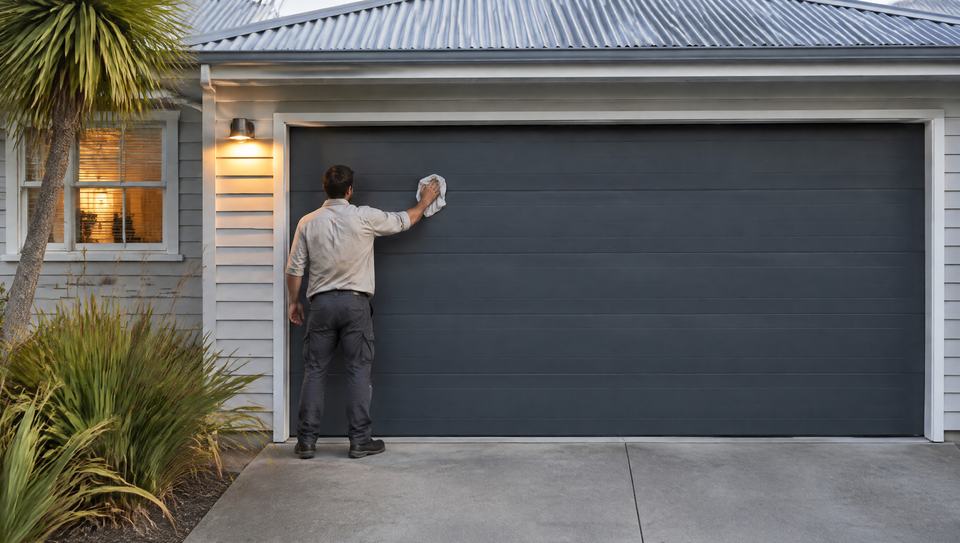
Garage door noise: sort the sound first
Before anyone reaches for a spray can, work out what kind of noise it is and where it comes from. A squeak or squeal, a grind or scrape, a rattle, and a hum from the motor each lead somewhere different, and only one of them is likely to go away with a cloth and a drop of oil.
Stand inside the garage, well back from the doorway, while someone else runs the door from the wall button. Note whether the sound comes on the way up, on the way down, or both, and whether it seems to come from the sides of the door, the top, or the opener on the ceiling.
A squeaky garage door: dry hinges and rollers
Squeaks and squeals usually mean metal rubbing on metal. Door makers build a little lubrication into their routines for exactly that: Dominator's maintenance sheet puts it at every 3 to 6 months, with a small amount of all-purpose machine oil on the steel hinges, and Merlin's manual for its MJ3800 opener says to oil the door rollers, bearings and hinges once a year.
If it has been a while, that is the place to start. Just as important is what not to do: Garador and Dominator both say grease and oil never go on the guide tracks, which get wiped clean instead. Which product goes on which part is set out in the garage door lubricant guide.
Grinding, scraping or a door that labours
A grind or a scrape is a different story, especially when the door also feels heavier than it used to. Dominator says a door that has become hard to open by hand may have a decompressed spring, a warped track or a loose cable, and no lubricant reaches any of those.
You can feel for it safely. Dominator suggests unplugging the opener every three months and moving the door by hand, because an opener is only meant to stand in for human strength. Its opener warranty expects a door that moves with no more than 20kg of force, and B&D NZ's care guide gives 20kg for a sectional door and 15kg for a roller door.
Merlin's manual for its MR855EVO roller door opener makes the same point from the motor's side: a sticking, binding or unbalanced door has to be repaired, because the opener must not be left to make up for it. A door that grinds and drags is wearing out its opener as well as itself.
Springs and cables: look, never touch
Dominator says the springs are under high tension, so a professional should service them, and that fraying cables are a reason to call one. Garador tells owners not to touch the drums or the lifting cables at all. If the noise seems to come from a spring or cable, stop using the door and leave it to a door specialist.
A noisy garage door opener or motor
Spraying the opener is not the answer to a loud motor. Dominator says the belt on its opener does not need lubrication, and Merlin's MT3850EVO manual says the opener needs nothing extra inside, although that model's manual does call for a light grease on the belt, pulley and rail once a year. Check the manual for your own model before you add anything.
A motor that hums for a moment and then does nothing has its own entry in Merlin's MR855EVO manual: check the door is not in manual release mode, because the springs may be broken or the door may be locked. Don't keep pressing the button while you work it out.
Some openers tell you something is wrong. On Dominator's Smart Pro, Smart and Secure openers the main light flashes after the door runs, and 9 flashes mean the motor was overloaded or stalled, which Dominator says calls for a door service through the dealer. Opener and motor repairs covers faults inside the motor.
Rattles, and a roller door in the wind
Wind puts real load on a door. Dominator says its roller doors run in side tracks that stop them blowing open or shut, dropping or swinging, and its opener manual warns that very strong winds can push on the door and tracks hard enough to set off the obstruction sensing while it moves.
A rattle that is new, or getting louder, is worth having looked at before something works loose. Dominator suggests checking the springs, cables, rollers and pulleys for visible damage, which you can do by eye with the door closed. Tracks and rollers are covered on the rollers and tracks page.
Can a garage door be made quieter?
Choosing the door is one way. B&D NZ says its insulated sectional doors, which have a graphite-infused EPS insulator fitted in the factory, also dampen sound.
Adding insulation to the door you already have is a different matter. Dominator warns that it adds weight, so the door needs weighing and new springs, or the opener's life is shortened and the safety reverse may not work as expected. Ask a door specialist rather than gluing panels on yourself.
Safe checks before you send the job
- Run the door from the wall button and listen from inside the garage, standing clear
- Note when the noise happens: opening, closing, starting or stopping
- With the door closed, look along the guide tracks for dust, grit or anything caught in them
- Look at the cables and pulleys for fraying or rust, and leave them alone if you see any
- Watch the opener's light after the door stops and count any flashes
What to tell the door specialist
- What the noise sounds like and when it happens, or a phone recording of it
- Anything that happened before it started, such as a storm or a knock to the door
- How heavy the door feels when you move it by hand
- The opener's model, which Dominator says is on the back of the opener
- Who installed the door and when, often on a sticker on the back of the door
What you can do, and what to leave
You can
- Listen, note and record the noise
- Wipe out the guide tracks with the door closed and the opener unplugged
- Oil steel hinges lightly if your door's care guide says to
- Keep water and sprays away from the opener
Leave to a door specialist
- Springs, cables, drums and pulleys
- A door that grinds, scrapes or feels heavy
- Bent tracks and worn rollers
- The opener's force and travel settings

What we would do
Record one full open and close on your phone from inside the garage, standing well back, and attach it or describe it when you send the job. The door specialist then hears the same squeak or grind you do, and you skip the hard part of explaining a noise over the phone.